




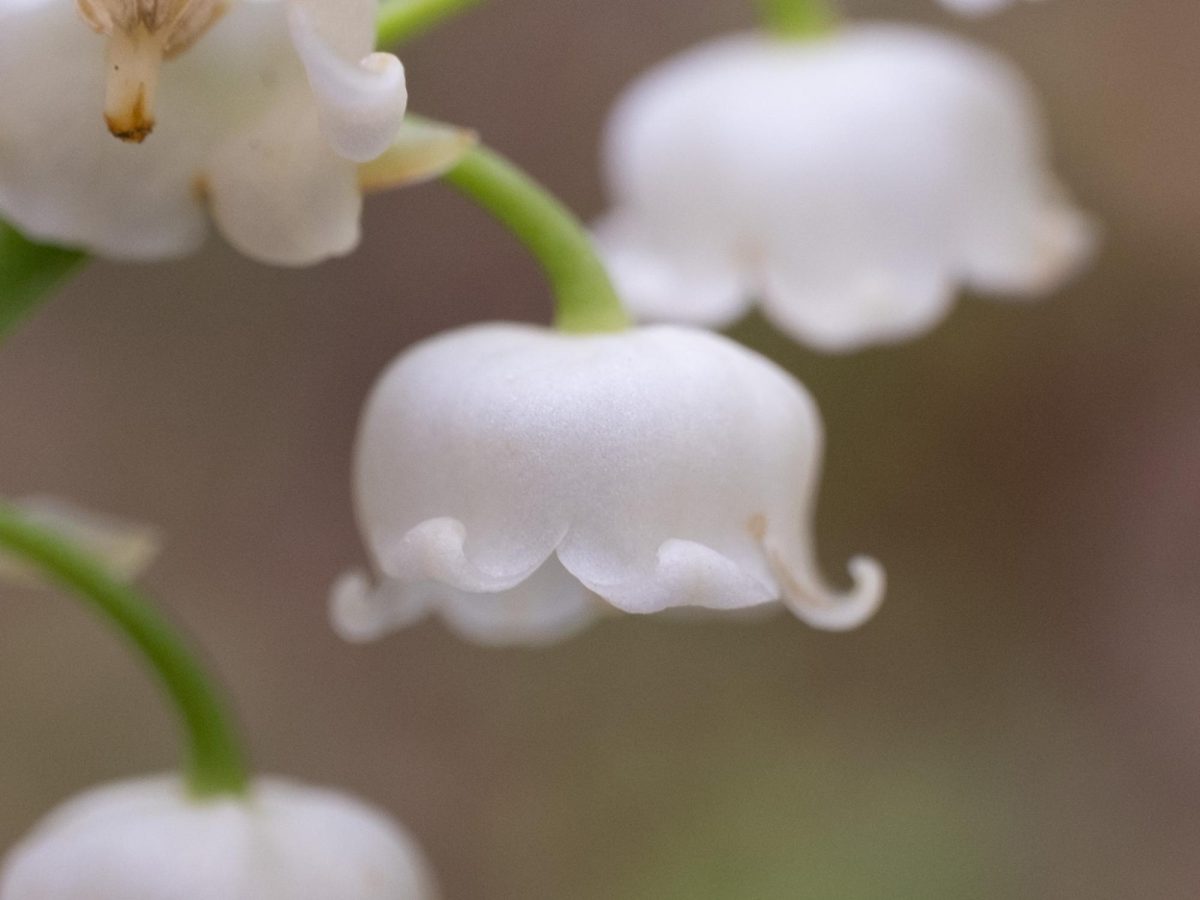









If I told you the cute and innocent thing was actually very deadly and dangerous, would you believe me? You probably would because that trope has been milked beyond dry. As cliché as it is, this trope is actually true for May’s birth flower, the lily-of-the-valley. Part of the Asparagaceae family, the lily-of-the-valley and the asparagus share this family with other popular houseplants like bluebells and spider plants. It’s kind of absurd that the asparagus and the lily-of-the-valley share the same family, but I guess it makes sense because asparagus is basically poison for kids.
Lily-of-the-valley, also known as Our Lady’s Tears, May lily, or May bells, is native to Eurasia, excluding the Mediterranean region. In Christian folklore, it’s said that lilies of the valley bloomed where the Virgin Mary wept at the crucifixion of Jesus, which is where the name “Our Lady’s Tears” comes from. Aside from Christian folklore, the lily-of-the-valley also has mythical associations in ancient astrology and Greek and Roman mythology. Today, the lily-of-the-valley is a popular pick for weddings and bouquets. In France, it became commonplace in the early 20th century to sell them for Labor Day (May 1st/Mayday). It’s even called “La Fête du Muguet (Lily of the Valley Day)”. In Serbia, lily-of-the-valley is picked on St. George’s feast day as a decoration to bring good luck and prosperity. In Helston, England, the lily-of-the-valley is worn during the Furry Dance, a traditional dance that occurs on May 8th every year. Aside from that, the flower is also Finland’s and Yugoslavia’s national flower.
But now you might wonder why I described this magnificent and delicate flower that symbolizes purity, humility, joy, and the return of happiness as dangerous in the introduction. Because hidden beneath its innocent facade are 38 different cardiac glycosides, which increase the output force and decrease the rate of contractions of the heart. While they have their place in medicine, such as for treating heart failure and arrhythmia, they are still highly toxic. Convallatoxin is the primary cardiac glycoside found in lily-of-the-valley, and ingestion can lead to arrhythmia and cardiac arrest. Every part of this plant is poisonous, and not just to humans; It’s also poisonous to pets and livestock. Despite all these dangers, they were still used in perfumes until they were outlawed. Further back, they were used for centuries in European folk medicine against gout and to strengthen the heart, although there is no proof this actually worked. With this explanation, you now have a better understanding as to why I described them as dangerous and deadly in the introduction!