
















Waking up to a snow day just hours before having to drag yourself out of bed is something close to a miracle, but so is deciding on one. With 180 instructional days needed for the school to maintain state funding, the Superintendent must weigh the options to determine the best outcome for everyone.
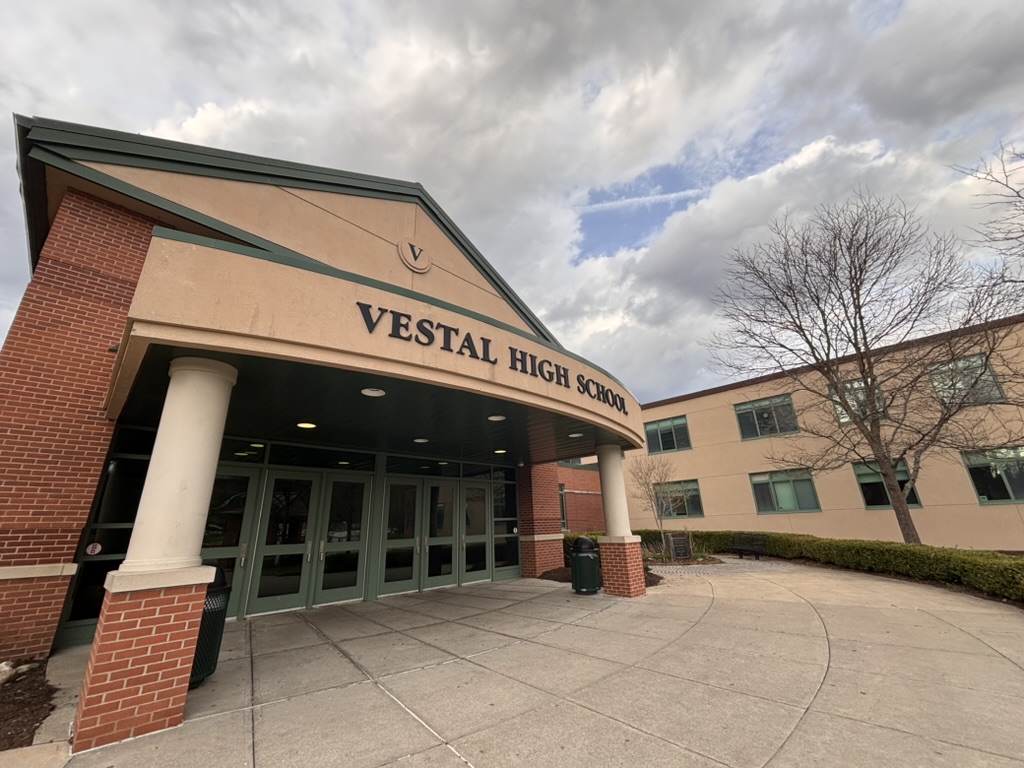
Curious about the decision making process, Bear Facts interviewed Mr. Kasson, the Superintendent for the Vestal Central School District and an administrator of 21 years, and Sydney Wade, the Assistant Superintendent for Finance, Operations, and Personnel, about the factors considered when contemplating a possible snow day.
Mr. Kasson began by describing the very collaborative nature of deciding a snow day: in case of hazardous weather conditions, fifteen superintendents from surrounding districts come together in a group chat at around 5 a.m. to discuss the possibility of a day off. Mr. Kasson brings home an internal document every day, which he brought for us to examine during the interview. The document contained phone numbers for various important individuals in this process, guidelines for bus drivers, protocols for certain situations such as a snowstorm during the school day, and building schedules for each school. Melissa Verbraak, the transportation supervisor, gets on the phone with different drivers to inquire about if road conditions are getting worse. Mr. Kasson also contacts Donnie Younker, the highway Superintendent for the Town of Vestal, who is responsible for maintaining town roads and snow removal. Furthermore, inquiries are made to the Town of Owego as well, considering the homes in Tioga that are included in Vestal’s school district, which shows just how much of a joint effort this decision making is. In the same superintendent group chat, they communicate delay results after talking to the transportation supervisors of other districts. It is important to note that what Union Endicott chooses to do has a massive impact on Vestal’s decisions, especially since “there’s going to be a lot of upset people seeing all the other schools delayed and we are not”, as Mr. Kasson explains.
Despite his cautious decision making, “not a delay or a school closing goes by without at least one call or one email of upset (people)… a lot of it is childcare, if you’re parents, and you need to go to work, and you count on your child going on the bus, going to school, now all of a sudden, wait, if it’s a delay, what do I do?”. Mr. Kasson’s acknowledgement of childcare struggles in relation to snow days or delays is incredibly relevant, considering the questions raised by concerned community members, staff, and students. However, he concludes that “…it ultimately comes down to safety”, and how that is not something he is willing to jeopardize.
One of the reasons the Bear Facts staff asked for this interview with Superintendent Kasson was the perception that Vestal is often the last district to report a delay or snow day. The superintendent refuted this, even when faced with a comment arguing that Vestal’s slow decision-making puts parents in a difficult situation. The Superintendent assured us that students and staff are priority, and that “we do it as early as we can”. For students taking zero period, and for staff members who have to be at school by that time, slower reports on delay can cause many inconveniences, particularly for staff who must commute from as far as Ithaca. Still, Mr. Kasson wants upset or inquisitive parents and community members to know that they can reach out to him about their concerns.
Another factor that is weighed heavily is the minimum of 180 instructional days that is set by New York State. Sydney Wade, who accompanied Mr. Kasson to the interview and who has previous experience working at Ithaca City Schools mentioned the importance of schools’ giving the opportunity for classroom instruction, and used an example from the 2023-2024 school year, where Ithaca City Schools lost $60,000 in state aid, due to one building sitting at 179 instructional days rather than the required 180. Despite the fact that a building emergency was a large cause of this, the state refused to waive the emergency. As the assistant superintendent explained, the state has specific criteria to determine if the closing was justified.
While Vestal has 43 million dollars, the fact that 1 day can make a difference as big as losing $60,000 is incredible, and justifies why schools are often wary of simply giving out delays or snow days.
In Vestal, 5 potential closures due to snow are factored in, but actual snow days vary depending on the calendar year. When asked what happens if we don’t use up all of the snow days, Mr. Kasson responded, “Then you come to school longer. Hooray!” No matter how many snow days aren’t used, we don’t ever end school or start any break earlier, an answer that plagues many students and staff.
Considering the complex decision process of a supposedly simple snow day, this interview was incredibly informative in allowing the Bear Facts team to truly understand the intricacies of school administration. This experience highlights the importance of speaking directly to officials and leaders, as most of the time, they would be more than willing to help.