
















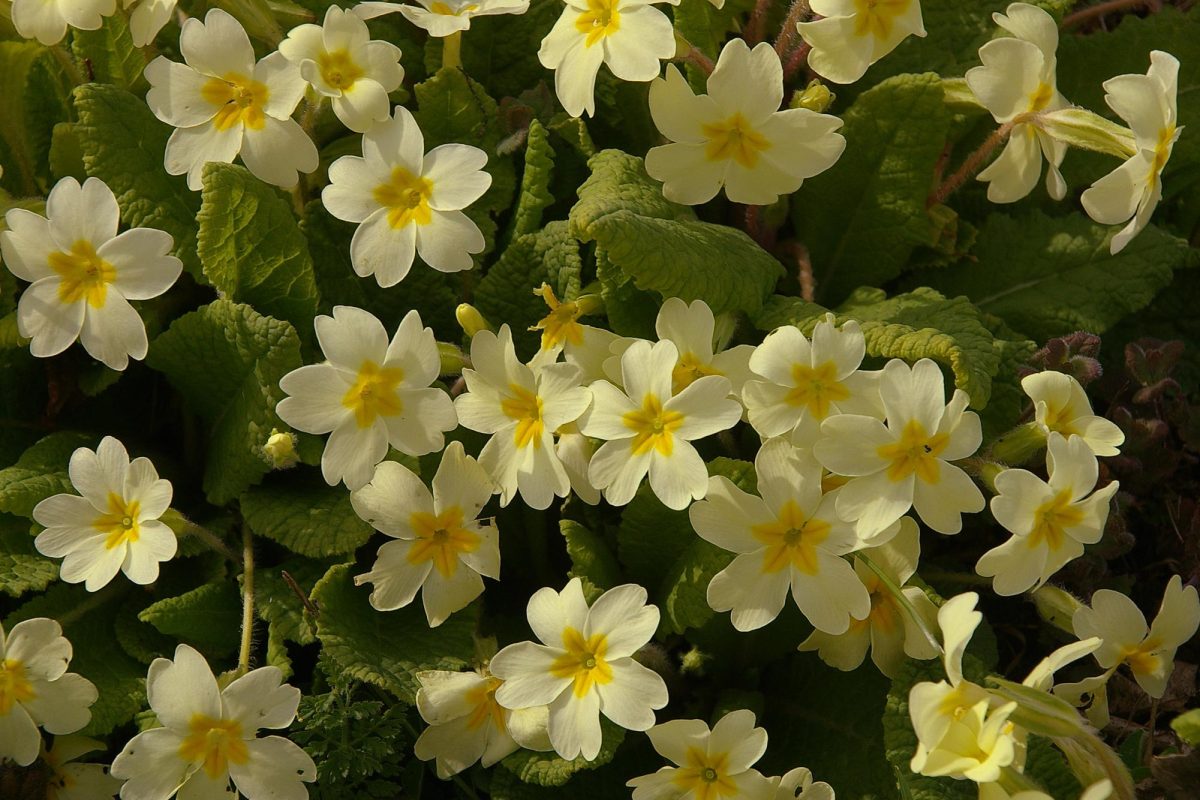
When you think of February flowers, the first thing that comes to mind is most definitely the rose. After all, it’s so deeply connected to Valentine’s Day, to the point where it might as well represent love as a whole. But what if I told you roses aren’t February’s birth flower? Instead, it’s the primrose and violet. Per tradition, birth flowers are linked to which month they bloom, and the rose blooms in June, not February. Additionally, roses were not traditionally associated with Valentine’s Day until the 20th century, when mass commercialization led to their widespread adoption. Sure, they had ancient symbolisms of passionate love and desire, but so do many other flowers. Maybe this Valentine’s Day, throw in some primroses and violets along with those roses.
The word “primrose” originates from its genus name, Primula, which is derived from the Latin word primus, meaning “first.” This makes sense because the primrose is one of the earliest flowers to bloom during spring, blooming during late winter to early spring, depending on the type of primrose. It could also be a translation of prima rosa, meaning “first rose”, but the problem is that the primrose is not a rose. Because of their early bloom time, primroses symbolize the arrival of spring and the renewal of life, youth, and new beginnings, often being used in flower arrangements to celebrate the season. In some cultures, they are believed to ward off evil spirits and bring good luck.
Originating in Europe, North Africa, and the Caucasus, the most common primrose, primula vulgaris, can be found all around the world, although they prefer cool, shaded regions. Other regional species exist, mainly in the Himalayas and Western China. Primroses have been cultivated since ancient times by the Greeks and Romans, primarily for their medicinal properties, which were used to treat skin and respiratory conditions. They gained traction in Europe during the 16th and 17th centuries, being used in art and literature. Primroses are also edible for humans and have been used to make wines, syrups, or just used as an herb. Shakespeare even wrote about primroses in A Midsummer Night’s Dream and Hamlet.