

















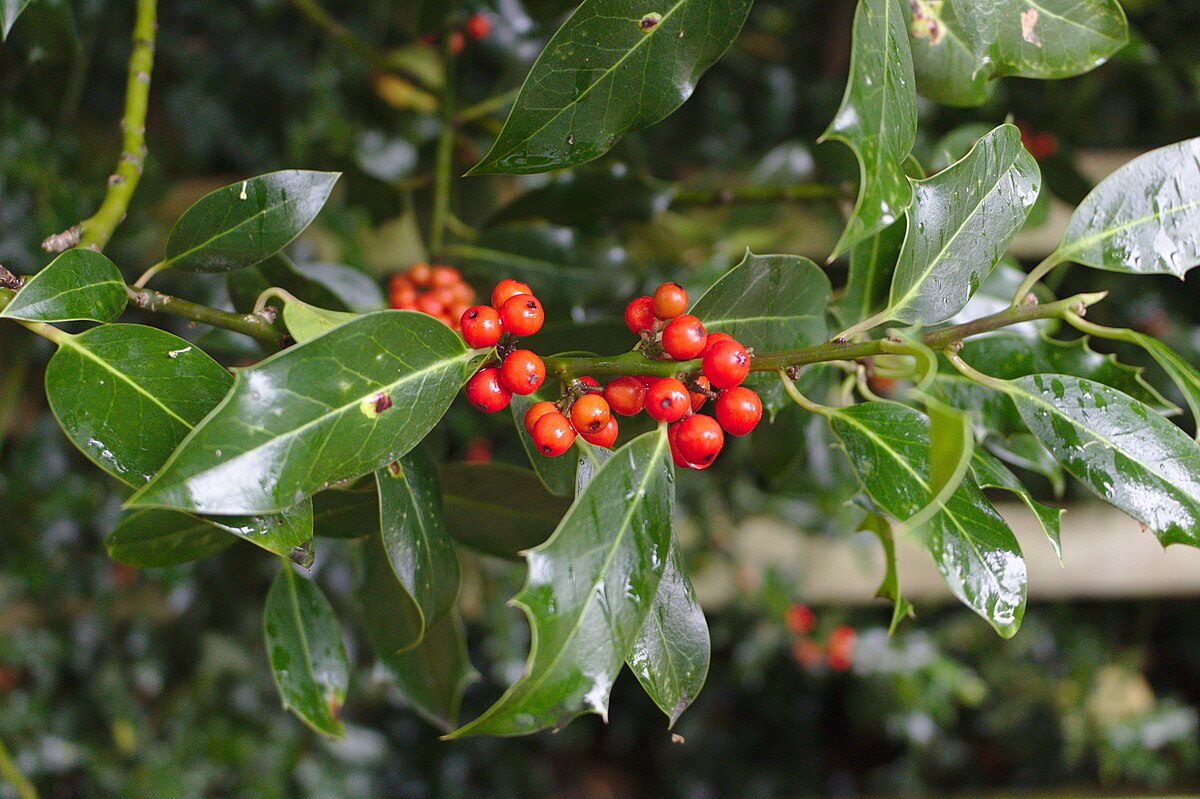
This winter, we’re expected to get more snow than usual. Perhaps because this year was especially awful, more snow is needed to wash the old away in preparation for the new. Being one of the birth flowers of December, the holly should symbolize rebirth and eternal life. With over 570 species of holly plants, they can be found all over the world, especially in the tropics and subtropical regions. You’d expect this flower, which is usually associated with Christmas, to be found in colder regions, but it enjoys warmer regions the most.
The holly is a recognizable symbol of Christmas, often shown with mistletoe for that classic Christmas decoration. In many Western cultures, the holly has deep Christian symbolism that has persisted since medieval times. The bright red berries serve as a symbol of Christ’s blood shed on the cross, and the spiky thorns symbolize the crown of thorns Jesus wore during his crucifixion. Combined with the fact that the holly retains its bright color throughout December, symbolizing eternal life, it’s easy to see how the holly became a hit Christmas symbol.
The holly isn’t just used as a symbol of Christmas, though. Outside of Western cultures, the plant has found its place as a symbol of protection from evil spirits. Across Pagan, Celtic, Japanese, and Christian cultures, the holly is regarded as a symbol of protection in various forms. Some cultures view it as a symbol of protection granted by a higher being, while others view it as protection from evil spirits, which is why holly plants are often planted near homes. In Japan, where the holly is known as hiiragi, it is believed that its sharp leaves protect against evil spirits and bad luck, and can even be used to ward off demons. Additionally, the holly has found its place in the culinary world, where the leaves of the plant are often used to make tea— most famously, the Brazilian Yerba mate. The Chinese also use holly roots as a traditional remedy against the cold and flu.