


















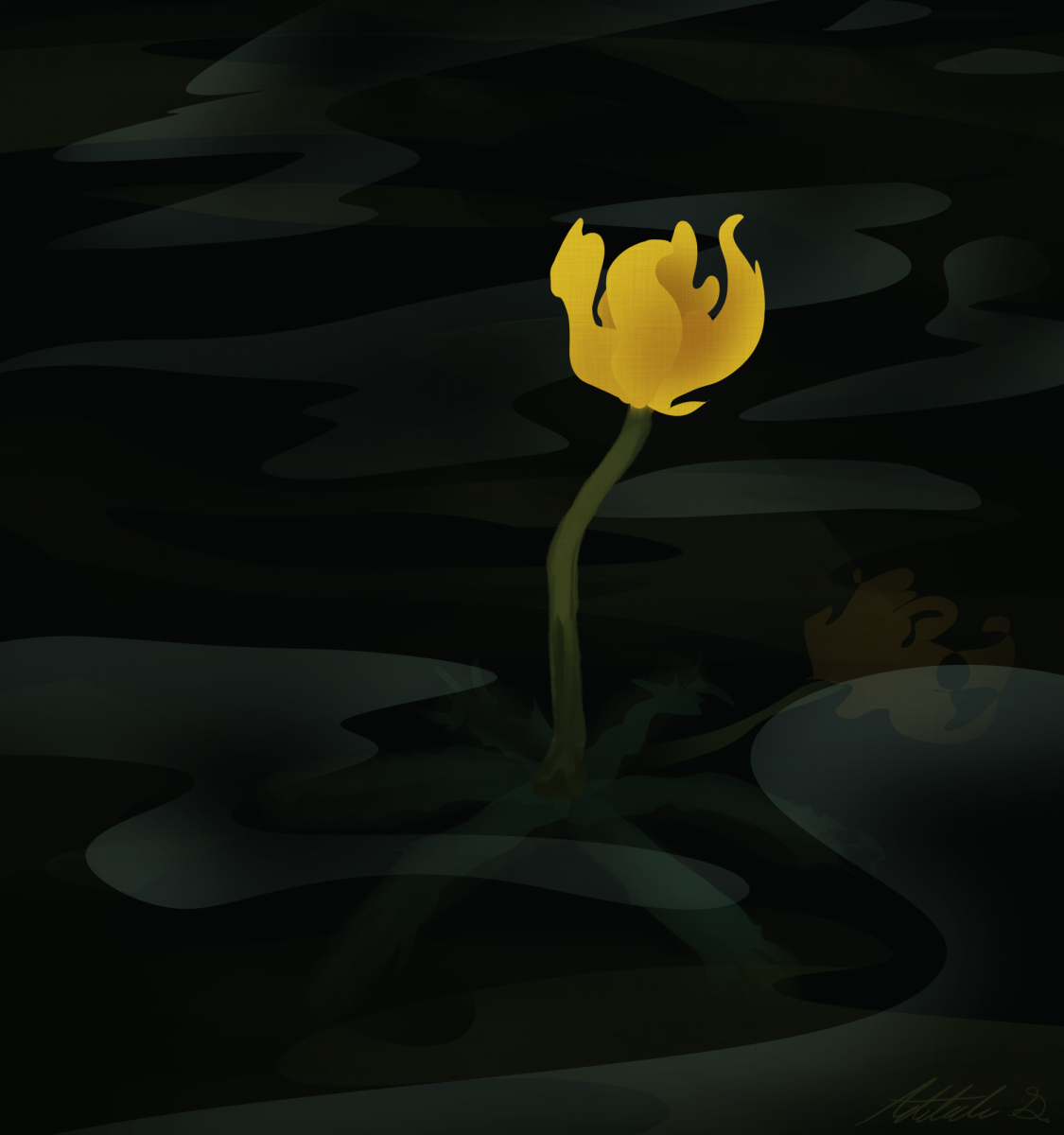
There are plenty of carnivorous plants besides the Venus flytrap. Bladderworts, a genus of 220 species, are one of many examples. Bladderworts catch and digest their prey (insects, larvae, worms, and fleas) with small, hollow sacs. They live in lakes and streams but can also be found in waterlogged soil. They have no roots, and their bladder-like stems usually float in the water (Britannica). Their two-lipped flowers are a beautiful, vibrant yellow with a forward-facing spur and release many seeds (Stritch). Bladderworts can form symbiotic relationships with organisms around them, which can aid in capturing prey and digesting it (Britannica).
Their bladders stay underwater and have flexible, sealed entrances. The plant pushes water out of its bladders, creating a low-pressure vacuum. When prey passes by, the bladder will open and fill rapidly, sucking the animal into it. This is triggered by bristles at the bladder’s entrance (Britannica).
Bladderworts are native to the northern hemisphere, though some species can be invasive, and are found in water as deep as 6 feet. It grows quickly and intertwines with the aquatic plants surrounding it, providing a lot for the ecosystem. Many mammals, birds, and bugs will use bladderwort for food and shelter (Stritch).
Works Cited
“Bladderwort | Carnivorous Plant, Description, Characteristics, & Facts.” Britannica, https://www.britannica.com/plant/bladderwort. Accessed 26 November 2025.
Rice, Barry, and Larry Stritch. “Common bladderwort (Utricularia macrorhiza Le Conte).” Forest Service, https://www.fs.usda.gov/wildflowers/plant-of-the-week/utricularia_macrorhiza.shtml. Accessed 26 November 2025.